News/Notice
The Competition for Derma and Bio Ingredients Intensifies “Ingredients Are Becoming the Brand”
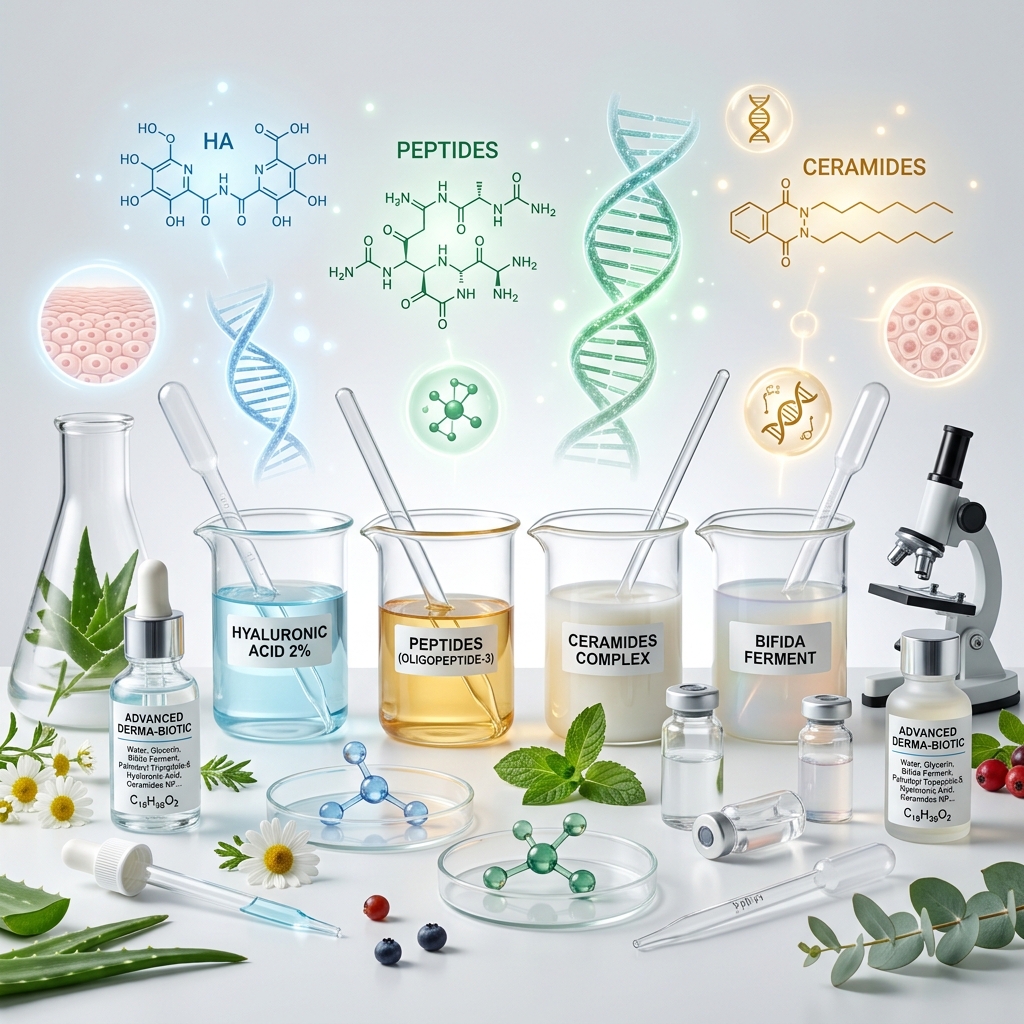
The Competition for Derma and Bio Ingredients Intensifies
“Ingredients Are Becoming the Brand”
On April 3, 2026, the global beauty market is accelerating its transition into the era of ingredient-centered beauty. Beyond simple marketing, competition over raw materials with proven efficacy is emerging as the core value of beauty brands.
Recently, the industry has seen a sharp increase in products formulated with high-performance bio ingredients such as PDRN, exosomes, peptides, and ceramides.
In particular, dermacosmetic products emphasizing skin regeneration and barrier repair are gaining strong consumer trust and leading market growth.
At the same time, technologies such as liposomes and nano-encapsulation are attracting significant attention.
These technologies improve the absorption rate of active ingredients into the skin while enhancing stability, showing that competition is expanding beyond ingredient lists to include delivery systems themselves.
K-Beauty companies are responding by increasing investment in research and development (R&D).
Through collaboration with OEM and ODM manufacturers, they are strengthening ingredient differentiation and building greater trust in global markets by securing clinical data and efficacy validation.
Consumer awareness is also changing rapidly.
The criteria for product selection are shifting from brand image to ingredients and scientific data. Full ingredient transparency and clinical test results are becoming major factors in purchasing decisions.
Experts predict,
“The future cosmetics market will be restructured around science rather than emotion.”
They emphasize that only companies with strong technological capabilities and ingredient competitiveness will survive in the global market.
Beauty in 2026 is no longer an industry that simply decorates the surface.
A single invisible molecule—
that microscopic world is now deciding the fate of a brand.

Global K-Trend Exporter
1F, Building B, 86-15, Dongsan-ro 27beon-gil, Danwon-gu, Ansan-si, Gyeonggi-do, Republic of Korea
Tel031-495-5886 Fax031-495-5887 E-mailkorea@v-vel.co.kr


Copyright (c)V-VEL Co., Ltd. All Rights reserved.Designed by WebSite.co.kr